Help me to help you
Reducing contact volumes with a smarter “contact us”
- client
- nbn co
- role
- CX design lead
- focus
- Data-led discovery · Service design · Decision-tree flows · Content deflection · User testing
impact at a glance
- 7,000
- rows of contact data analysed by category
- Top 5
- contact reasons identified to drive the design
- 4-level
- cascading decision tree to triage every enquiry
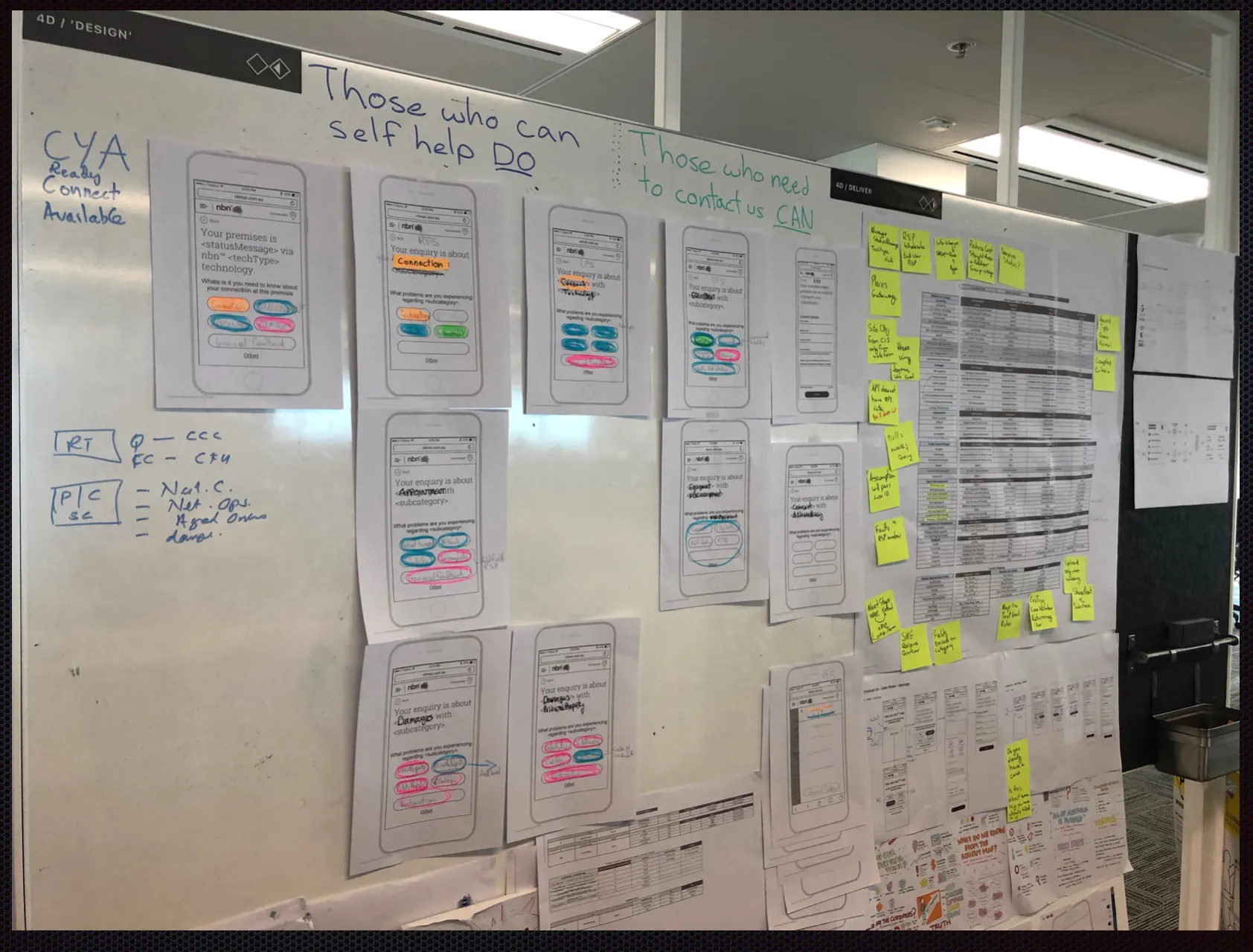
“I have a problem, can we take the phone number off the internet.”
Actual business owner
The problem space
nbn co wanted to reduce contact volumes through a better digital “contact us” form.
The existing web form was generic and mostly free text, and it often couldn’t capture the information needed. Many of the contacts it generated could have been resolved online or routed to a resolver group. Instead, front-line staff spent time redirecting them, and customers with a genuine need had to wait.
The initial proposal was a guided flow that tried to answer people’s questions before letting them submit an email.
My role
As CX design lead, I set the CX strategy, ran the workshops that uncovered end-user needs and journeys, and oversaw research and customer testing, turning the findings into practical design solutions. I partnered closely with the customer agent team and their data. Illustrations were by the amazing Nikki Nolan.
Process & artifacts
Who is contacting us?
The first step was using data to understand who the customer was.
Why are they contacting us?
Next was understanding why customers contacted nbn co, which meant a lot more data crunching. The customer agent team had a wealth of analysis, from keywords to Salesforce categories. I went through a spreadsheet of around 7,000 lines of categories and subcategories with a fine-tooth comb, and boiled it down to the top five reasons people make contact.
Knowing the who and the why gave us two principles:
- Those who can self-help do, when they understand their need and where it fits.
- Those who need to contact us can, and will when they can’t easily diagnose their need themselves with enough depth to act on it.
A decision tree, not a form
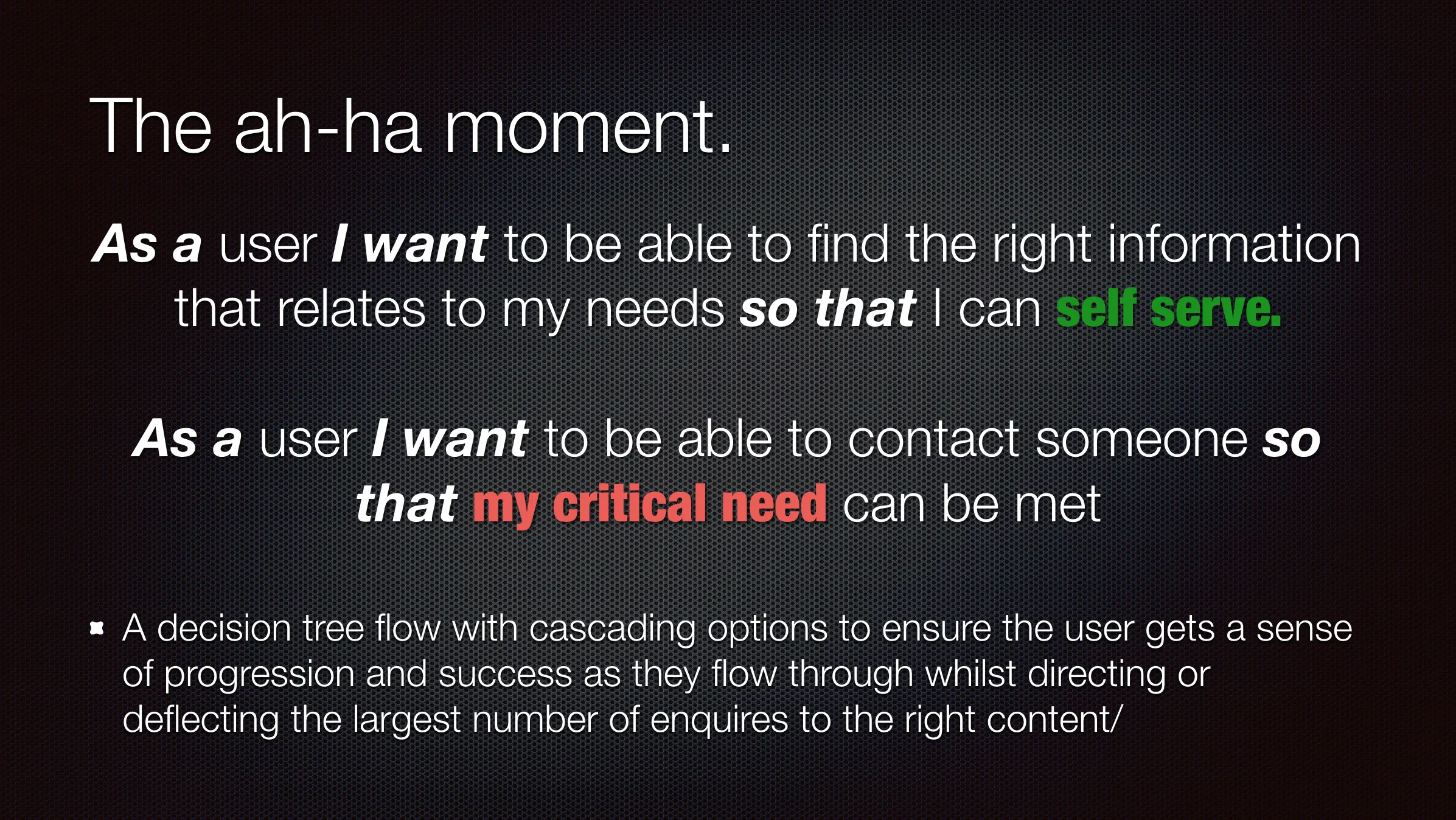
nbn already had a key data point: the customer’s address check. That told us which technology they were getting, and when. Combining it with the agent data on the top five questions, the solution became a decision-tree flow with cascading options. People get a sense of progress and success as they move through it, while the largest number of enquiries is directed or deflected to the right content.
Ideation: help and deflect
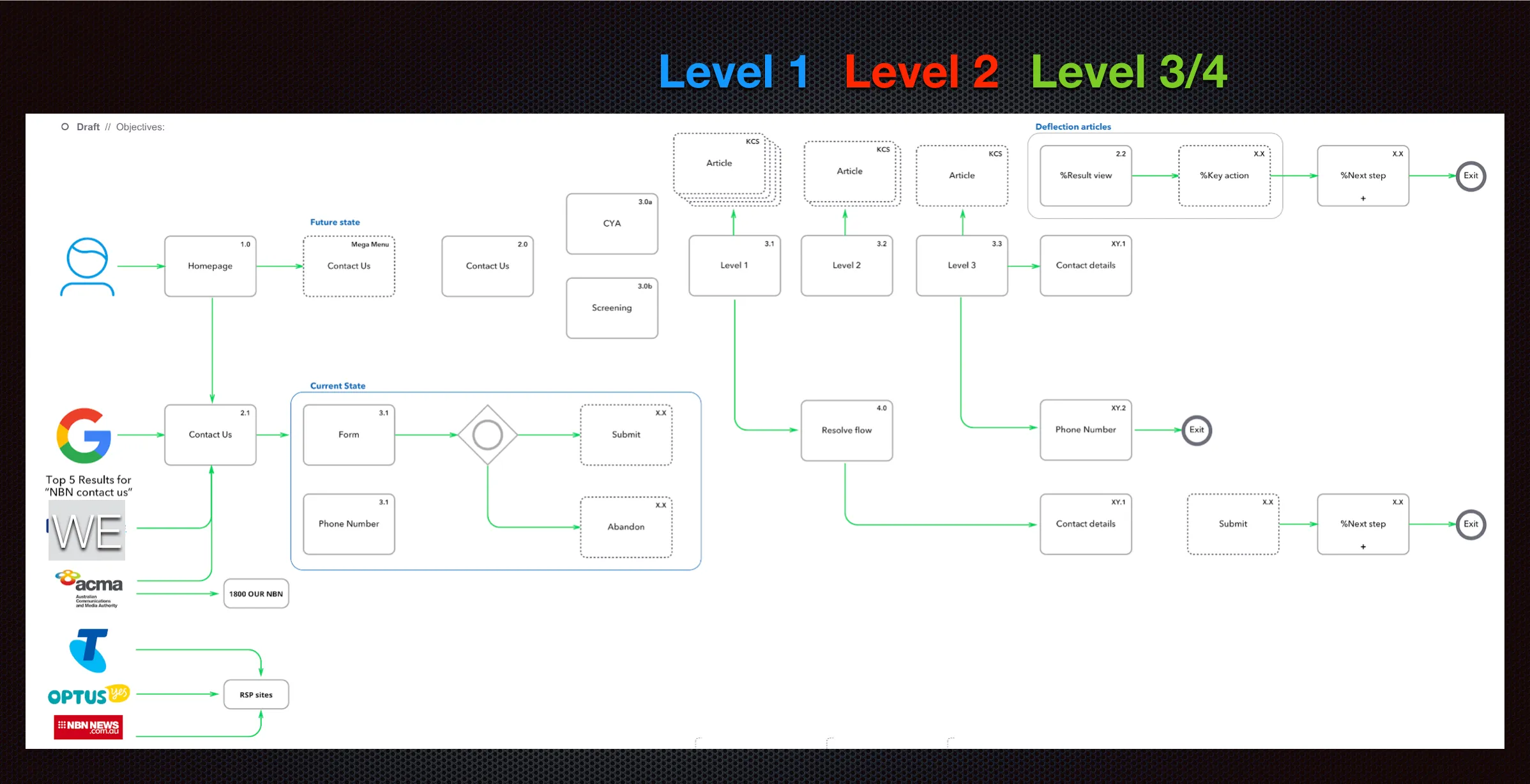
Ideation showed that content for many customer problems already existed on the website but was never surfaced. So the new contact flow became both help and deflection: it presents relevant articles first, and only shows a contact form once a category and subcategory are known. Those forms go straight to the right resolver group, bypassing the agent altogether.
The approach also meant categories that mattered most to the business, such as damage, could get a quick, direct path to a contact form.
Impact
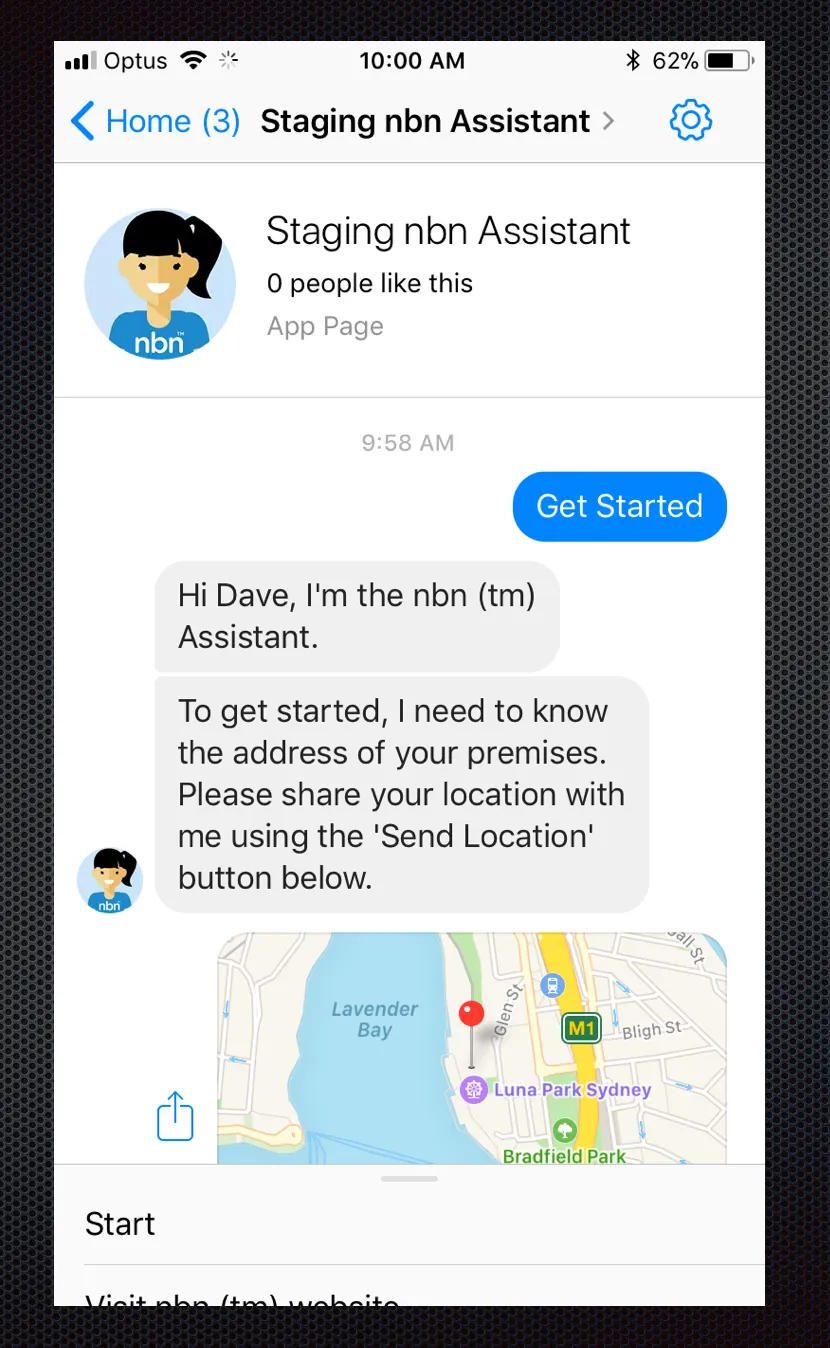
After user testing, we added general feedback as a way for customers to always reach nbn co, whatever their enquiry type and whether or not they could supply an address.
The result was a contact experience built around the five things people actually needed. Self-help came first, damage and other critical needs got a fast lane, and enquiries reached resolver groups already categorised instead of passing through front-line agents.