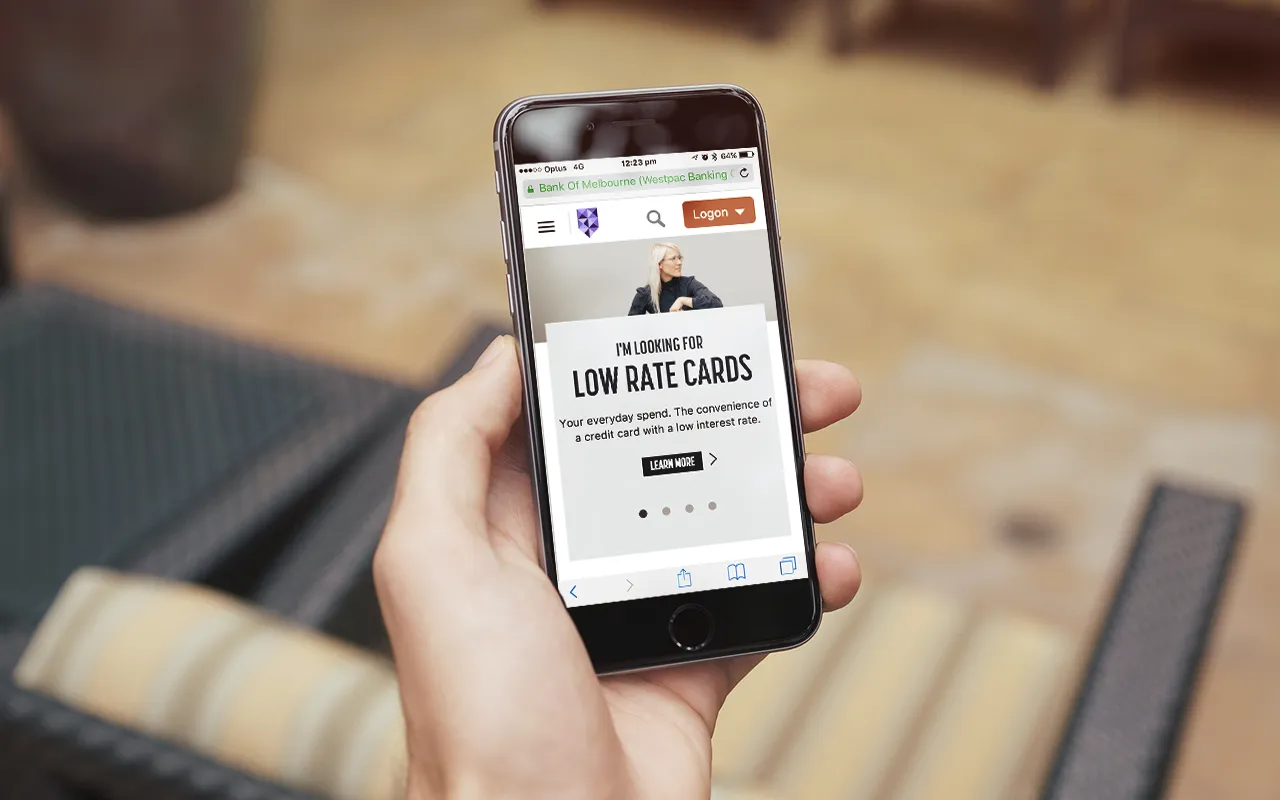
Re-imagined banking, governed by design
Deliver a simple experience for banking customers: from ideas to delivery
- client
- Westpac Group · Bank of Melbourne
- role
- Senior CX designer, Westpac GEL design system team
- focus
- Design systems · Design governance · Agile rituals · AEM components · Stakeholder management
impact at a glance
- 6 mo
- to rebuild Bank of Melbourne’s site, vs 2 years for St.George
- 3
- brands designed from one multi-brand system
- 3 → 5
- people in the CX team as the project scaled
- 2 wk
- sprint cycle, from design through customer testing
The problem space
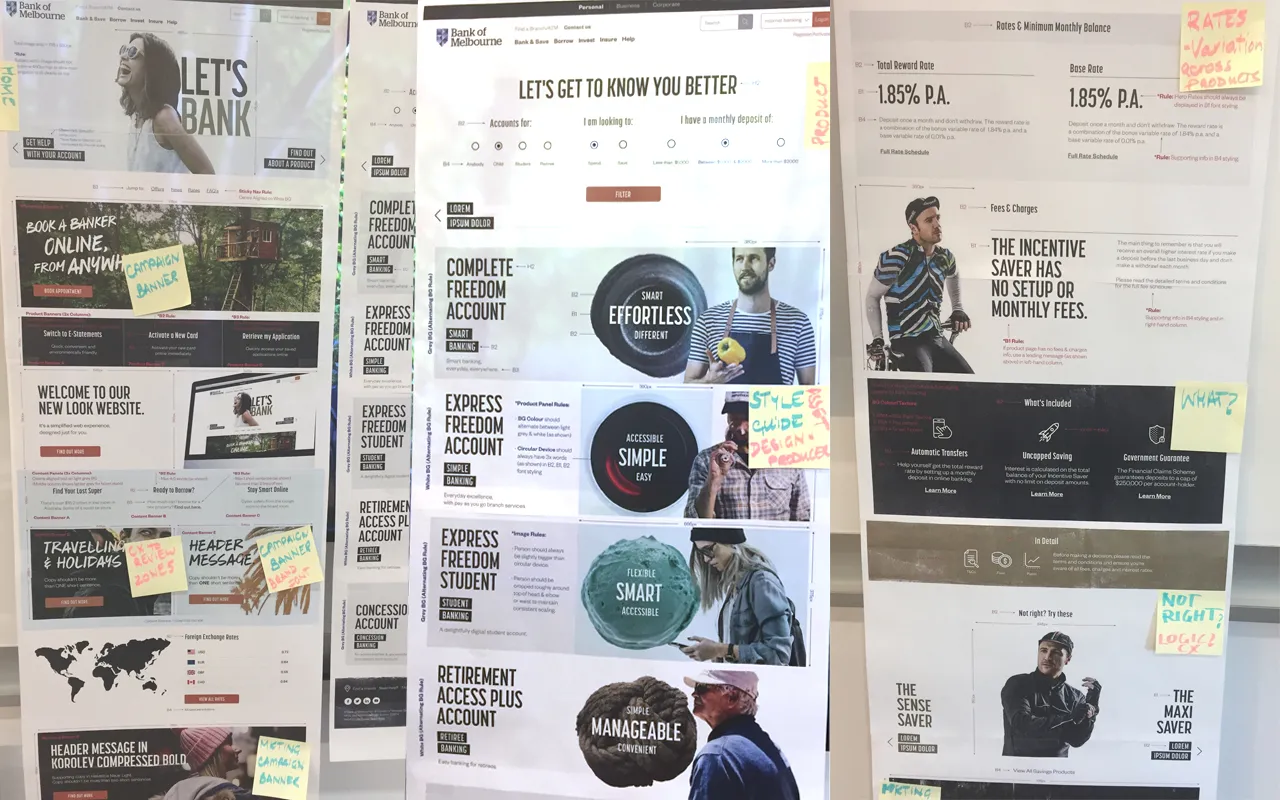
Westpac’s Re-Imagined Banking project, known internally as Simple, was entering its second phase. Bank of Melbourne, part of the St.George group, had been chosen as the pilot: a full rebuild of its public website, desktop and mobile-responsive, which then had to carry across to the group’s other brands.
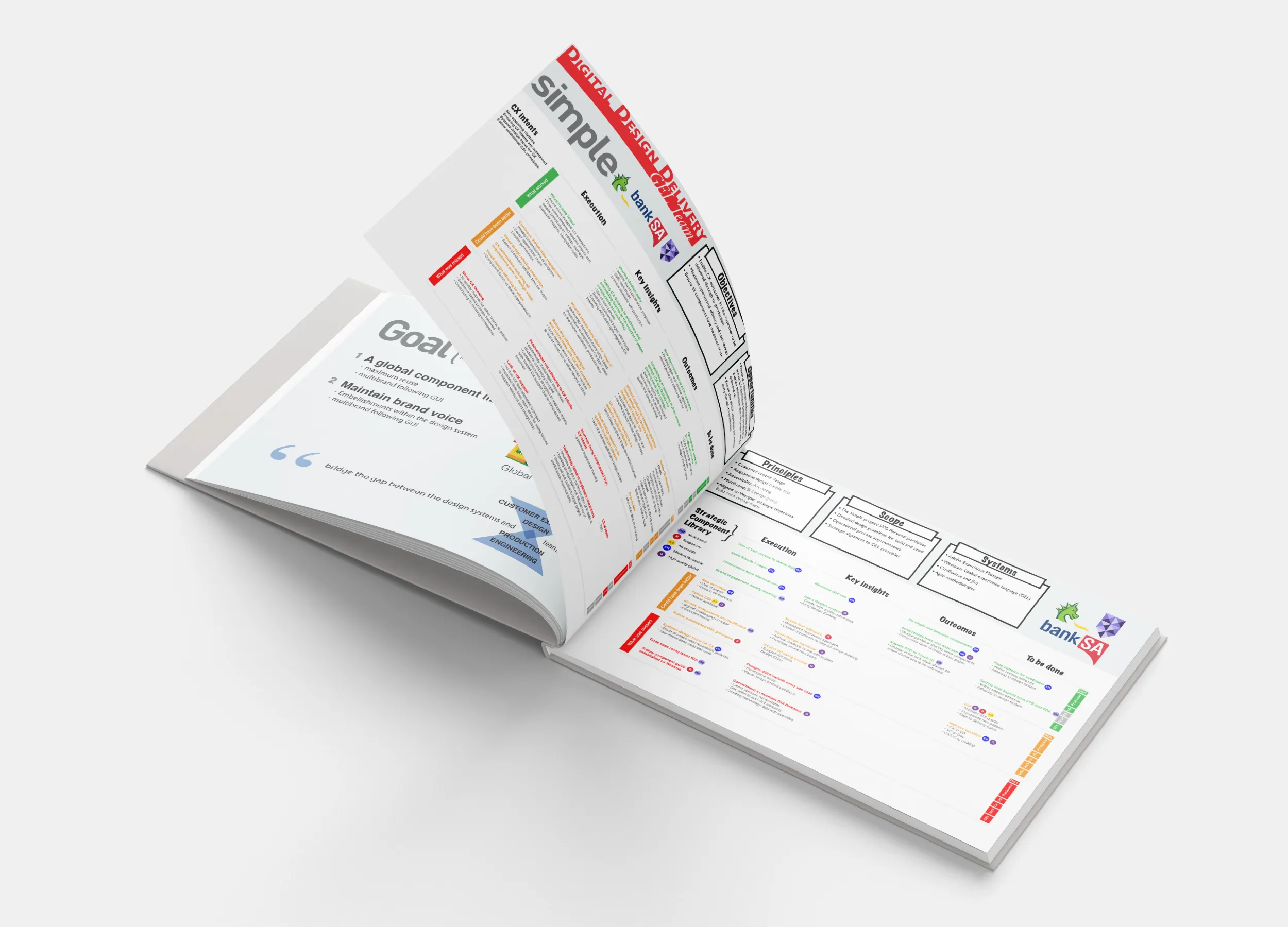
The Westpac GEL (Global Experience Language) team wanted a systems-design focus on the governance of CX. The established GEL principles had to be followed, and the project had to hit three strategic goals: production efficiency, multi-brand, and accessibility.
The risk was a familiar one. A fast-moving project with many departments involved would gradually wear away the customer experience intent until it was gone by the time it reached production.
My role
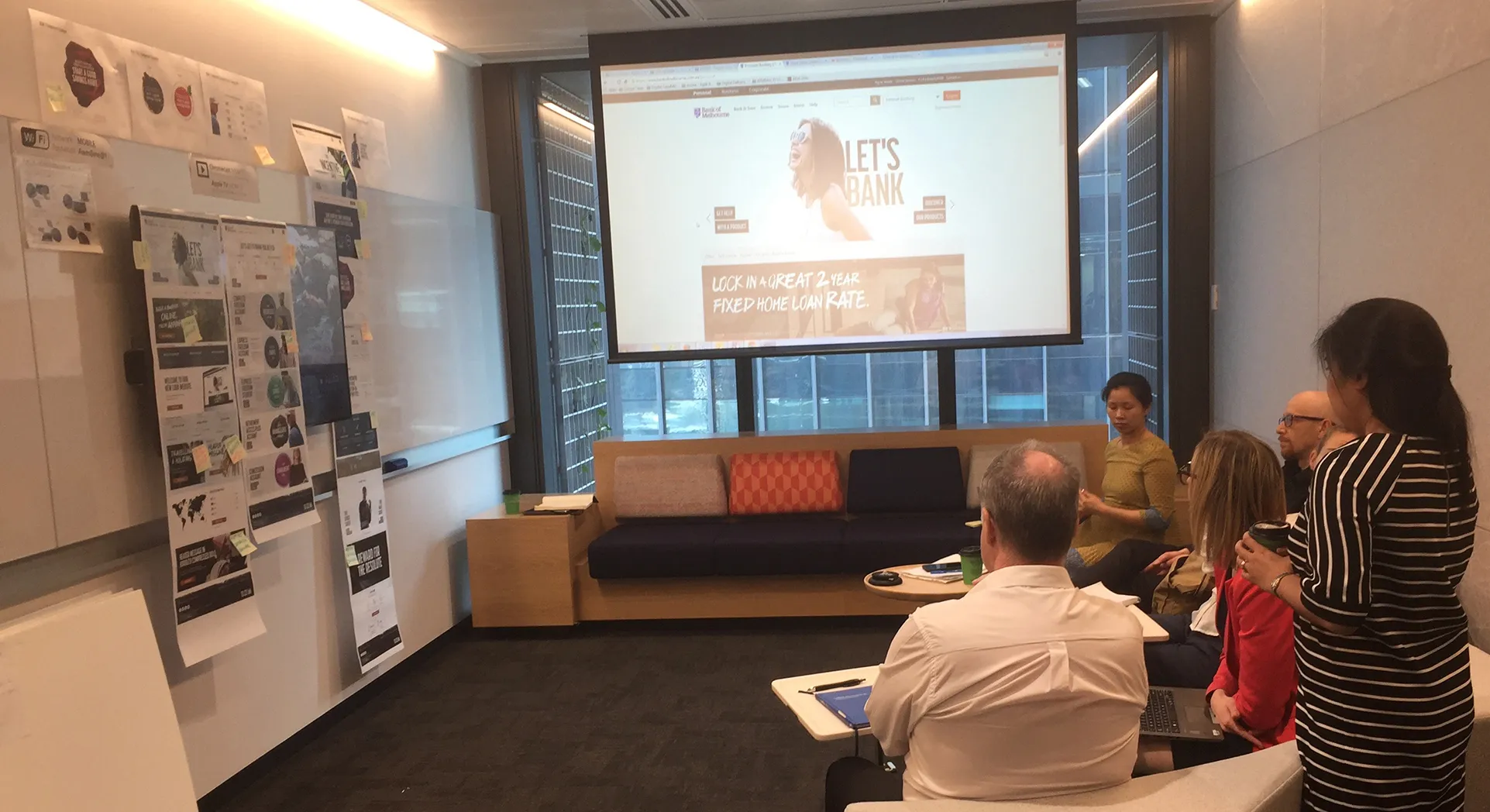
I was engaged by the GEL team to embed in the project, directly responsible for implementing GEL and making sure CX concepts and intent survived through to delivery.
- Team: I started alongside 2 CX designers and a content strategist. The team grew to 2 dedicated CX designers, a design lead, a program lead and a responsive UX specialist.
- Stakeholders: CX, Visual Design, Production and Technology, plus BOM Brand and Marketing, often with specific and sometimes divergent objectives.
- Remit: I acted as an extension of the GEL team. That freed GEL resources to focus on group-wide capabilities, such as Sketch tooling for designers and responsive, multi-brand design tools.
Process & artifacts
Keeping CX intent alive
I focused on keeping stakeholders on the detailed design and keeping them engaged, while protecting CX intent:
- Getting CX to commit early to known, scalable elements, so production and visual design could start building sooner
- Representing CX in every agile ritual, so the CX team could focus on tight deadlines for journeys and detailed design
- Making CX deliverables traceable by capturing intent and artifacts in Confluence and Jira, in line with the project’s operating rhythm
- Managing CX deliverables and content to keep the developer backlog full
- Making CX thinking findable for stakeholders and future projects
Supporting visual design
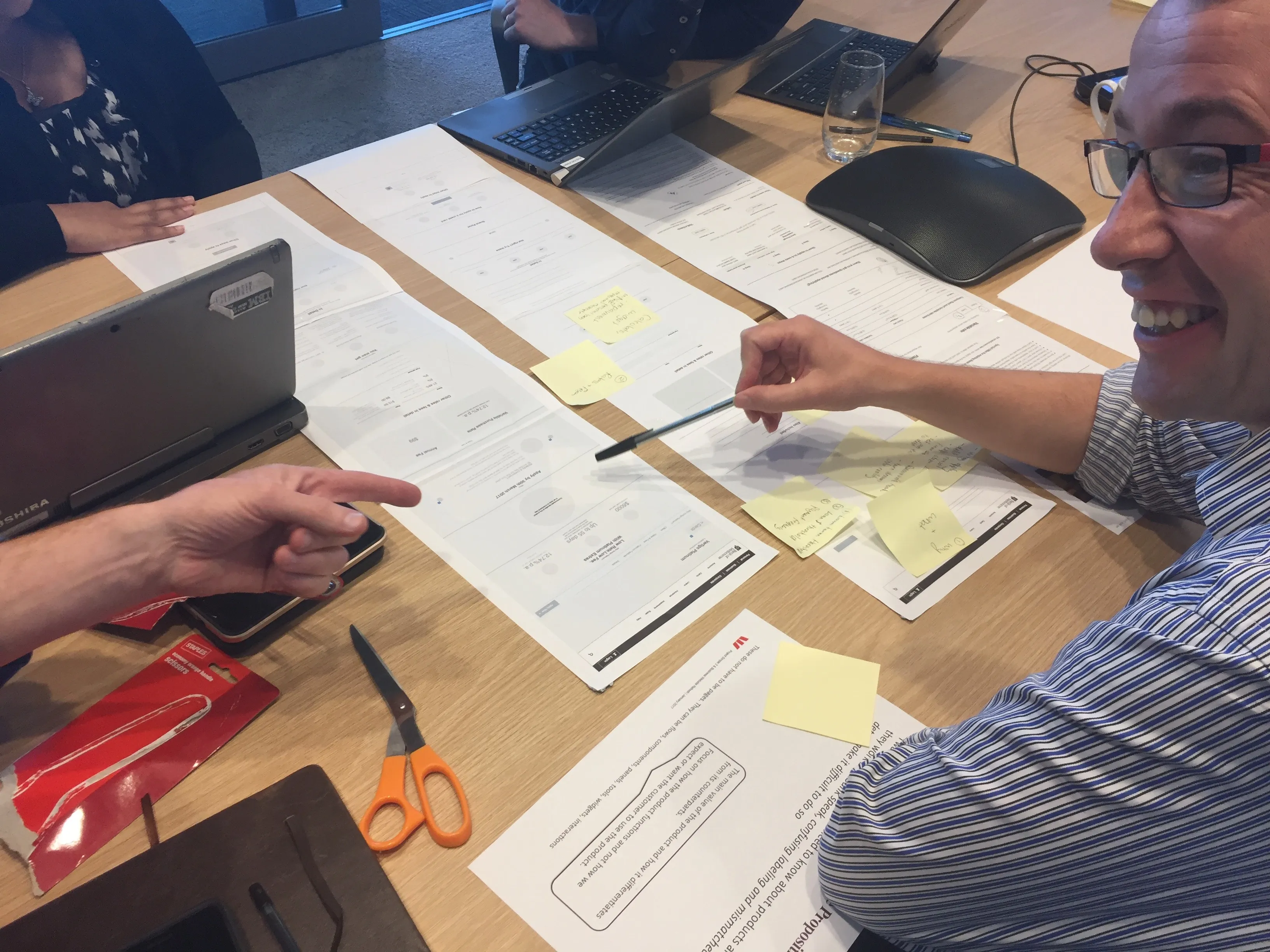
Sometimes that meant championing quality in senior stakeholder meetings. Other times it meant getting on the tools so the highest-quality design was implemented and developers understood what they were building.
- Making sure visual designers had the content and technology needs in hand before they started
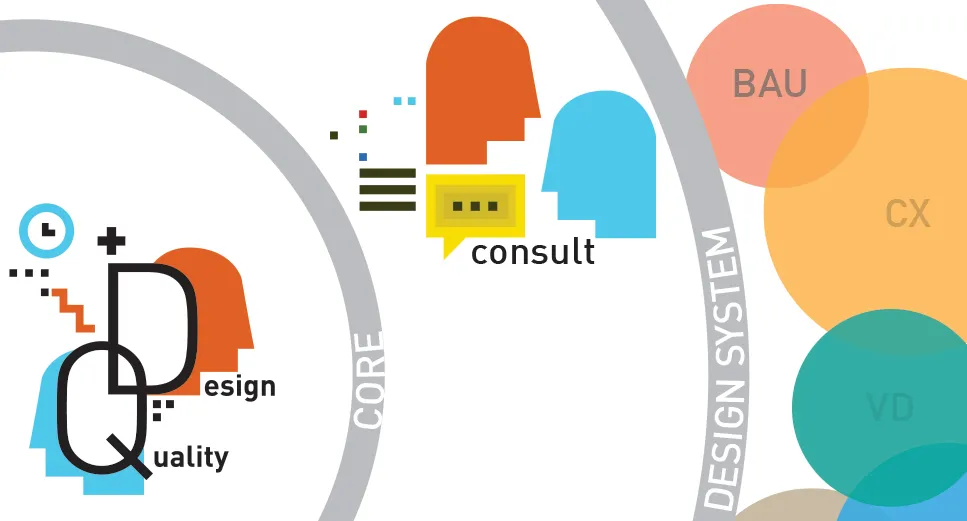
- Protecting quality through peer review, Design Quality Support Sessions and design clinics
- Working directly with Brand Champions on multi-brand solutions that visual design could then refine
Production & technology
Production was made up of scrum masters, producers, and developers working on the UI and AEM integration, so the focus there was delivery:
- Focusing on AEM components early in the process rather than on features
- Helping CX and visual design treat authoring in AEM as an important step in bringing CX intent to life
- Raising technology challenges early with every discipline, and pushing what was possible without losing CX intent
- Getting the developer community to a more mature understanding of the front-end GUI framework
- Maximising component reuse across the range from high to low reuse, with no purely bespoke components
- Setting up and managing third-party code review: establishing scope, then managing the engagement across disciplines
Designing for three brands
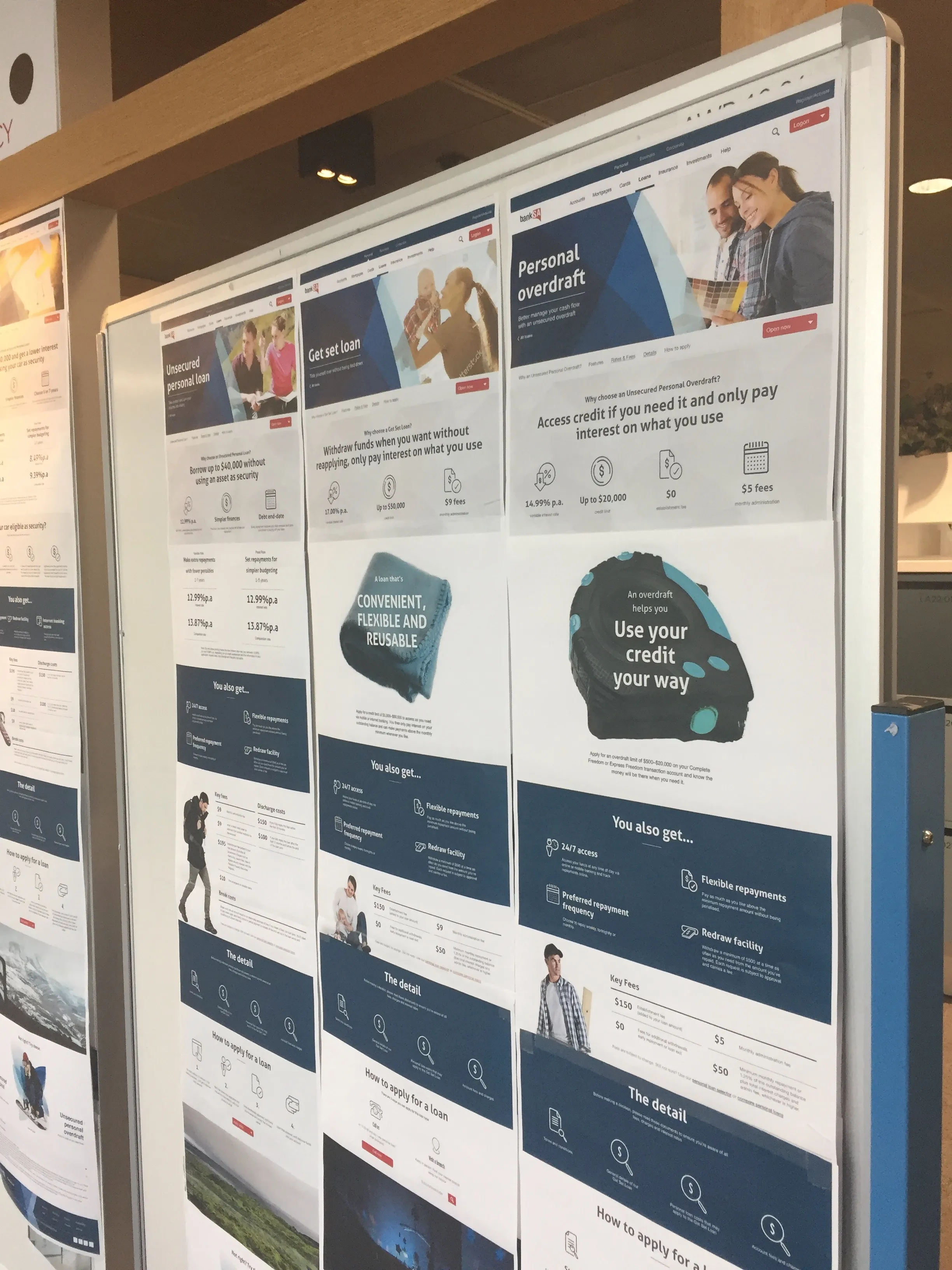
The project was led by BOM Brand and Marketing, so applying the design to the group’s two other brands took care. Each had to keep the essence of its own personality and meet the expectations of its own brand and marketing stakeholders. My background in brand and visual design is what let me hold that line inside GEL.
Impact
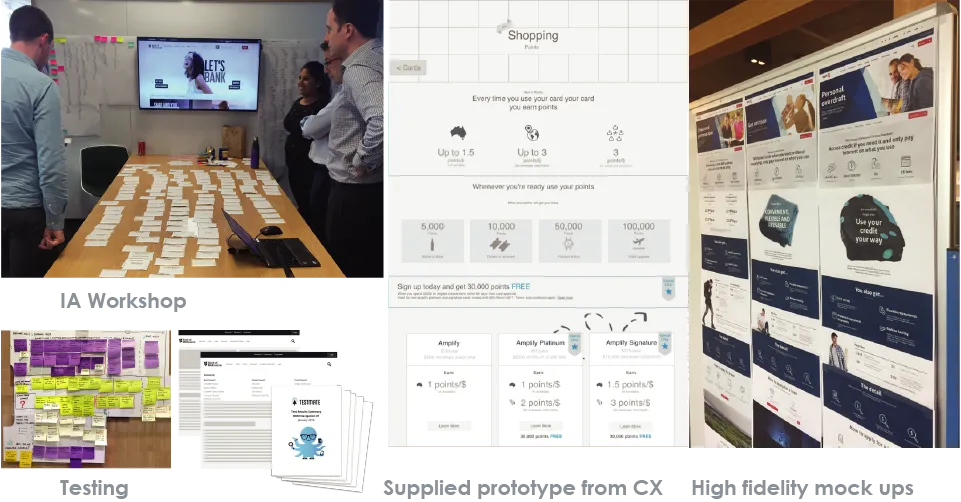
We ran fortnightly sprints covering design, prototyping, customer testing, ideation and high-fidelity design, followed by operationalising the designs for delivery. Working this way, the team redesigned the Bank of Melbourne website one portfolio at a time and delivered in 6 months what had taken 2 years for St.George.